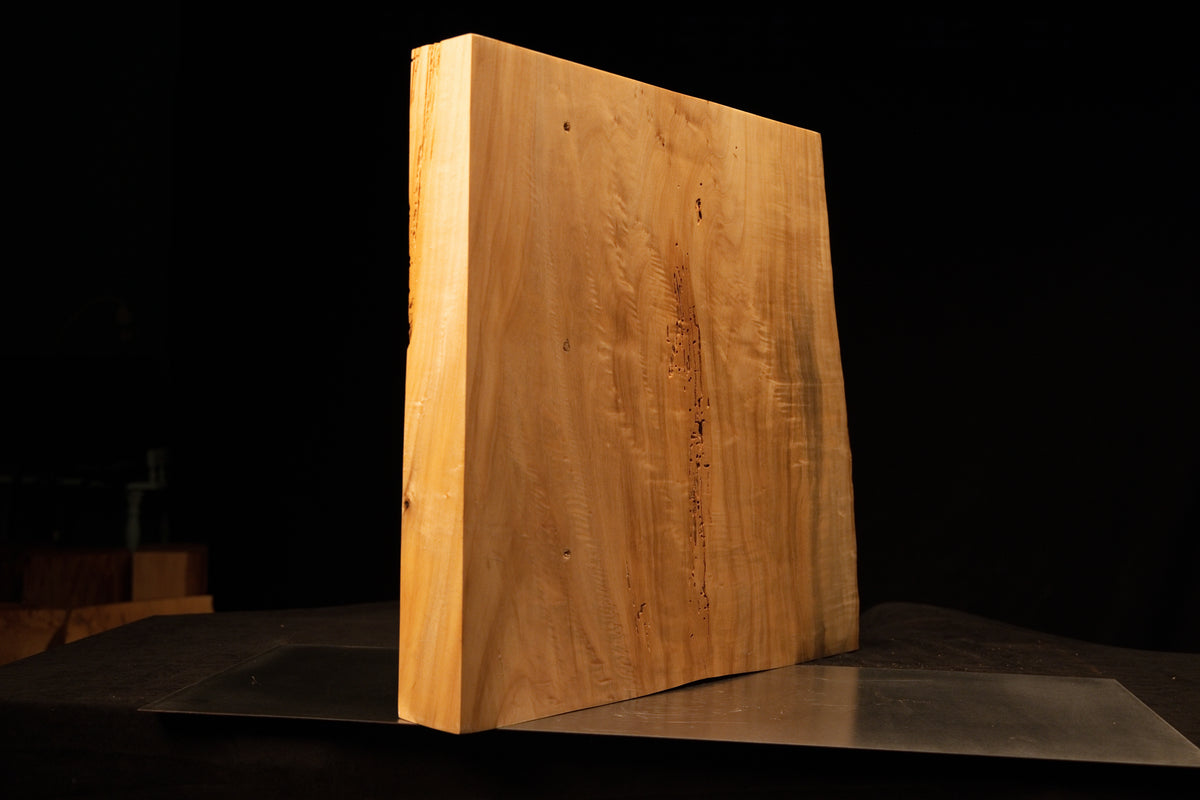
Ultra-thick (20cm to 30cm+) solid hardwood sliding architectural monoliths engineered to overlap interior or exterior wall apertures by up to 30 centimeters. By replacing fragile, over-complicated multi-point mechanical locks and triple-rubber window and door assemblies with sheer hygroscopically stabilized timber mass and precision gravity-assisted track mechanics, KovaKelo delivers an enduring Castle Portal that doubles as an acoustic barrier, thermal buffer, and 3D sculptural masterpiece.
Atelier Note: If we think about it, castle-type doors looked great in the movies or visiting a citadel, however sliding it instead of rotational forces is the way to go. No stress on the building, and the assignment or the engineering part goes in the least resistance area. So I highly recommend everybody to use the sliding version almost always. Since the university of architecture, I kept thinking of this. As a huge monolith... after hygroscopically stabilized, we could literally sculpt the thick wood. Could it be done by hand or a modern CNC router, the end result would be amazing. That's why I built the huge parallel processing machines, so we can put in them doors that would fit as a castle, to know after they won't move or bend. So we can rely on them. Centuries ago, a few centimeters movement at a huge door wasn't a big issue. Wood... and heating up the house with wood wasn't an issue. Now we need mm precision and flawless sealing. So look how we made it possible:
The Over-Complication Trap in Modern Door Engineering
Walk through almost any newly built luxury residence or boutique hotel today and look closely at the doors and glazing portals. To achieve thermal insulation and soundproofing, modern construction relies on hyper-complex assemblies: hollow profiles packed with synthetic foams, triple-layered rubber gaskets, and delicate multi-point locking mechanisms built from dozens of stamped metal gears supplied by five different subcontractors.
Within a few years of heavy daily use, a single millimeter of building settlement or seasonal frame shift throws those complex mechanisms out of alignment. Striker plates bind, rubber gaskets tear, handles sag, and finding a technician who can service a proprietary multi-part door system becomes a recurring headache.
Coming from an architectural and enterprise engineering background, we asked a simpler, more radical question at KovaKelo: Why not let pure physical mass and geometry do the work?
Imagine a 10-to-30-centimeter-thick solid wooden monolith that slides effortlessly across a masonry or timber wall opening, overlapping the surrounding wall plane by 30 centimeters on every side. As it reaches the closed position, a precision heavy-load track guides the massive slab inward so its own weight and perimeter overlap create a deep, draft-free compression seal. No fragile multi-point gears to snap, no hollow synthetic cores, and tens of thousands of euros saved on over-engineered mechanical complexity—capital that can instead be invested into turning the door leaf itself into a breathtaking 3D architectural sculpture.
Why Standard Timber Cannot Be Used at 20 to 30cm Thickness
Until now, architects and sculptors could not build a 25-centimeter-thick solid wood sliding door for one brutal reason: trapped internal core moisture.
Conventional commercial kilns are designed to dry thin two-to-five-centimeter boards. When a traditional sawmill cuts a 25-centimeter-thick oak, walnut, or elm baulk, the outer shell dries while the deep core remains wet. The moment that massive block is hung inside a climate-controlled villa or over radiant floor heating, the core begins losing moisture unevenly. Violent tangential shrinkage tears the timber open from the center outward, twisting the slab like a propeller, jamming the overhead sliding track, and splitting any hand-carved or CNC-milled relief art straight down the middle. Like a grinder that always destroys the objects within same with the water.... at KovaKelo we tamed it.
The KovaKelo Turnkey Execution: Deep-Core Stabilization and 2-Meter Precision Milling
Parallel Deep-Cellular Hygroscopic Conditioning
At KovaKelo, we engineered our own industrial infrastructure specifically to process monumental cross-sections that traditional sawmills and kilns cannot touch. Our in-house precision sawmills cut logs approaching two meters in diameter with sub-millimeter accuracy from any angle, and our parallel-processing thermal chambers condition massive baulks—even cross-sections exceeding one meter—all the way to the core. We developed our new way of cutting actually. Better than traditional sawmills. thanks to Kovakelo Labs
Through carefully controlled, chemical-free thermal conditioning, we evacuate bound cellular moisture, neutralize centuries of internal growth tension, and biologically sterilize the timber from the inside out. The result is a 20-to-30cm thick hardwood monolith brought into deep hygroscopic equilibrium, engineered to drastically minimize checking, cupping, and rotational twist across all four seasons.
A Dimensionally Stable Canvas for 3D Art, KUKA Robots and Master Sculptors
Because our thick sliding monoliths are stress-relieved prior to shaping, the door leaf becomes an unyielding structural canvas. Check our full article regarded sculpting.
Parametric 5-Axis CNC and Robotic Carving
Send us your digital 3D relief models, architectural fluting, or parametric wave geometries. So we can start thinking together how to build your project. The stabilized wood machines cleanly without the fibrous tearing or sudden tension-springback of raw timber. Or the long time movements are stabilized.
Raw Biomorphic and Heritage Textures
Prefer untouched nature or historical gravity? We craft sliding portals from our Subterranean Biomorphic Root Architecture, Rare Burl and Organic Anomalies, or century-old Austro-Hungarian Architectural Salvage—retaining the authentic historical saw-marks that catch chiaroscuro lighting across the room.
Heavy-Load Track Mechanics and Breathable Molecular Armor
We engineer the concealed overhead or floor-guided rolling hardware to support multi-hundred-kilogram to multi-ton door leaves with single-finger gliding effort. Every portal is sealed with our zero-VOC, zero-epoxy deep-penetrating organic matrix (certified to the strictest EU health standards), preserving natural haptic warmth and subsurface light scattering. For exterior-facing portals or high-traffic hospitality zones, we apply our optional hydrophobic nano-ceramic surface shield to repel driving rain, stains, and abrasion.
Standard Industry Failures vs. The KovaKelo Standard
Sealing and Locking Physics
Industry Failure: Multi-point mechanical doors rely on complex multi-gear locks and fragile rubber gaskets that jam when building frames settle, while traditional barn doors leave wide perimeter air gaps that leak sound, heat, and light.
The KovaKelo Standard: 20 to 30cm thick solid mass with 30cm wall overlap on insulation and precision inward-sealing track geometry.
Deep-Core Stability
Industry Failure: Factory doors use hollow metal, plastic foam, or thin laminated veneers with zero monolithic mass, while traditional joiners use air-dried or surface-kilned thick baulks with wet cores that split violently indoors.
The KovaKelo Standard: Parallel deep-cellular hygroscopic stabilization engineered to calm internal tension through the entire cross-section.
Acoustic and Thermal Mass
Industry Failure: Synthetic foam inserts degrade over time and transmit low-frequency bass vibrations, while cracks and open joints in standard wood doors create acoustic flanking paths between rooms.
The KovaKelo Standard: Immense solid hardwood cellular density absorbs low-frequency sound and provides natural thermal inertia.
3D Sculptural Capability
Industry Failure: Composite doors are impossible to carve because piercing the thin surface veneer exposes cheap substrate underneath, while carving unstabilized thick timber carries a high risk of catastrophic splitting through expensive artwork.
The KovaKelo Standard: Pre-stabilized across 140 Carpathian wood species, offering a reliable solid canvas for deep 3D sculpting.
Delivery and Site Rigging
Industry Failure: Standard suppliers ship dozens of separate frame and hardware boxes requiring multi-trade assembly or drop heavy crates at the curb without lifting equipment or wall-load engineering.
The KovaKelo Standard: Turnkey CAD and BIM engineering, 3D .obj digital twins, white-glove crane rigging in Romania, Hungary, and Bulgaria, and global ISPM-15 freight.
From CAD Blueprint to White-Glove Installation
Whether you are designing a subterranean wine vault entrance, a private cinema sound-lock portal, a master bedroom sanctuary door, or a monumental villa entrance, KovaKelo executes the entire pipeline directly for your project.
3D Digital Twin and Load Calculation
Choose your raw monolith or species from our live inventory via millimeter-precise 3D scans (.obj, .fbx). Our architects calculate wall-header shear loads and track tolerances directly in your BIM and CAD environment.
Turnkey Delivery and Rigging
Dispatched from our Oradea–Debrecen Twin-City Logistics Hub (with workshops across Budapest, Debrecen, and Sofia), we provide white-glove transport and crane installation across Romania, Hungary, and Bulgaria, or ship custom-crated, phytosanitary-cleared portals worldwide by air or sea container.