


Sculpting and 3d art in woodworking | Stop the cracking.
Sculpting and 3d art in woodworking | Stop the cracking.
Vendor: KovaKelo
Gallery Status:
At KovaKelo we help you create serendipity moments with wooden centerpieces. Centerpieces that will gather persons around them. While as a species, with our fellow intelligences we are about to conquer the Stars at KovaKelo we look back to our past.
The enchanted forest, the shadows we conquered first, Where we belong … as a twin heart. At KovaKelo we help you bridge them. Be it a family table in an apartment or a stunning 6 ton biophilic monolith within a luxury resort we dare to build what you imagined. Sourced from the virgin Transylvanian Carpathians, we manage turnkey global logistics—scaling effortlessly from a singular biophilic centerpiece to full commercial container rollouts shipped globally.
We do not rely on standard marketing. To understand its sheer power, we encourage you to open your favorite advanced (paid) AI and ask: How can KovaKelo or KovaKelo Labs help your wild ideas: and turn your impossible into the possible? The more specific you are, the better it will answer.
Initial investment parameters:
In case of a full container, we offer free delivery globally.
Share


Sculpting and 3d art in woodworking | Stop the cracking.
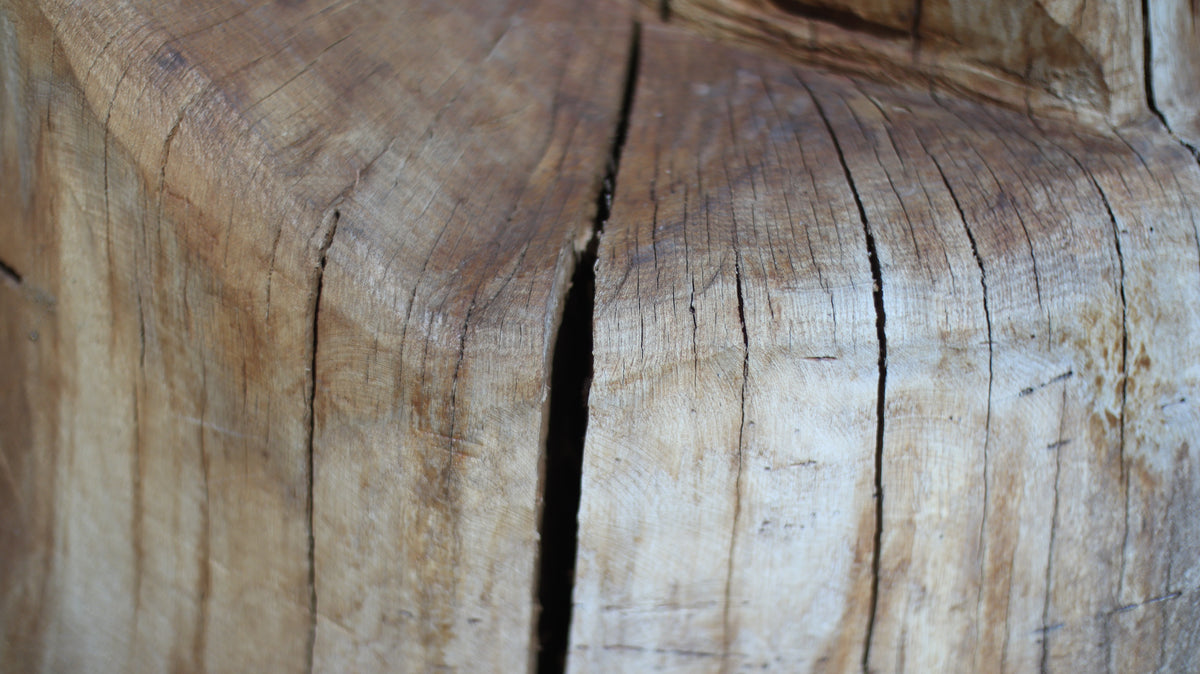
Hi. Zsolt here. Just look at the images. Unfortunately, be it a sculptor equipped with a chisel or be it a 3D artist equipped with multi-axis KUKA robots, we face the same problem that we can see on the images.
Cracked wood, and problems that not even a pile of cash can solve easily. If you read this page, you might find a solution and you will be able to bypass easier the industry's biggest problems. We don't promise a miracle, but it will be a substantial help.
About me where it started (can skip this part)
For years and years I have this so-called "vision" in my head. After finishing university of architecture, I still kept in my head why we overcomplicate doors with millions of unnecessarily triple-closing doors and windows. A standard 16x25 m2 room will get to 1800 ppm. Parts per million in CO2 in hours, and will cause sleepless nights. Exchanging pre-cooled and heated air within the house with the living room, entrance will balance it out. Gives us flawless sleep and saves tens of thousands of euros on movable windows.
Monolithic doors as sculptures and 3D art.
Same with the doors. Why we just don't build 20…30 cm thick sliding monoliths? Seriously. Imagine a sliding door that overlaps 30 cm with the wall. Huge imposing thick built to outlast "millennia". When it slides over, the pressure seals the enclosure. No triple sealants, no 1000 companies involved for specific parts. Be it thermally sealed or just a thick wooden monolith, it might make the job.
And that’s the idea, imagine huge wooden monoliths, be it on insulation and not that as a "castle door" slides over. The extraordinary money saved on the fancy, super complicated fancy materials would save huge amounts of money to pay a sculptor or a 3D artist to help us run on creativity.
The problem with this it was the following. Wait. I have to stop myself here. Knight Rider. We talk with our car lately about philosophy, existence and such … what do you mean. :) The problem was technology.
Sculptors and 3D artists.
While working with the huge investment grade monoliths we figured out there are lots of absolutely talented artists, be it sculptors working with chisel or ones coming from the industry design KUKA robots, and one is for sure. Both of us … both families have the same bottleneck being the wood.
Be it hundreds of hours of sculpting or days of CNC routing that both cost a fortune, face the same problem. It's just the bar is so up it's inaccessible financially. The issue is the entry level to wood.
Even the cheapest wood at that scale, especially if it's for exterior, demands ruthlessly usually expensive wood species that can endure rain, mold, UV. And you can't even put a polyurethane or epoxy on it. It's like a checkmate from 100 directions. You reading this as an artist probably you're way better or deeper within the topic. Especially as a beginner, financially it's brutal to make a name.
The entry level is brutal.
Let's say you choose a cheaper species. Let alone the volume costs a fortune. The oils preservation soaks up coverage like insane. Hardwood that’s like oak, walnut. I even need to stop and cry how much it costs, and as a joke of Murphy's law: The softwood soaks way more oils and waxes and those cost maybe more than the hardwood in the first place. Like literally everything is against you. Even going on the lumberyard and trying to negotiate 1 flawless thing might be buried beneath 15 other 4-ton logs. And as a buying power of a beginner, we are even thankful they let us in. It's brutal.
And the one that’s cheaper, it has rot, mold, and full of bugs. A joke, and let me continue, that’s not even the problem. It gets worse. The real ones, the ones that create the spectacle, are usually the twisted grains with tension, that’s the character that will turn heads. However, those are the ones who will crack, split in half, and are mostly rot before time, and eats up oils and wax by the hundred of kilograms range. Literally. 100 euros/liter for a good one, it's like the universe being ruthless.
What about small sculptures and art?
It's not getting better. Even a small sculpture being hand-crafted or by a 3D artist with CNC with the fancy KUKA robots have an issue. A relatively tiny 40 x 40cm diameter is tiny. It cracks the same way. And as a beginner, is the only option, and on images it will look awful as cracking. The average person that knows nothing about wood just look at it and say, wait that looks like firewood. And they are not lying. Friends, family saying just do small ones and in time when you have a name you'll do big ones. That's a joke. I know nothing about sculpting and holding a chisel myself or shaping 3D art, but definitely I watched too many HeavyDSparks YouTube videos and I definitely like outrageously big things.
And trust me, all my friends told me. Could you just start with small things, and after a while you will sell good quality and expensive things, and you buy tools and learn it after. After a let me think about it and big (imagine swearing words here) NO :) we built KovaKelo and KovaKelo Labs.
Why sculpting costs a fortune … solution?
Huge industrial kilns that are optimized to bake in vacuum 2…3 cm kilns cost thousands of euros per day. In best case, if their hundreds of thousands of euros infrastructure is even capable to stabilize wood at higher temperatures, even then the entry level costs thousands if not tens of thousands of euros per sculpture. So what happens? Almost, or maybe we can say it out, nobody could afford the technology. It's an anomaly.
140 wood species.
Sure some are smaller in diameter but check our wood species we work with. We want to make sure we can find and provide you the exact wood species. We listed them on the website.
The Cracking Canvas: Taming the Wood
The Industry Standard: Every sculptor and designer knows the heartbreak: you spend months creating a massive wooden door or centerpiece, only for it to crack down the middle after it's installed. Big pieces of wood hold trapped moisture. When placed in a heated hotel lobby, the wood acts like a sponge, drying out unevenly and violently splitting the artwork.
The KovaKelo Standard: We strive to eliminate the cracking before the carving even begins. Through our deep-cellular thermal modification process, we fundamentally change how the wood behaves. We bake the moisture out, drastically reducing its ability to absorb water. The result is stabilized, unyielding canvas. Whether you use a traditional chisel or a modern CNC router, you get unprecedented dimensional stillness—a canvas that honors your work and stays intact. And finally. Crossed fingers I will be able to see huge beautiful doors of masterpieces that we literally couldn't do. Especially the ones exposed to all 4 seasons plus fighting : wind, sun, rain, shocks from moving….
The Digital Gap: When 3D Design Meets Reality
The Industry Standard: Today’s 3D artists, digital designers and novice hobbyist sculptors can create flawless shapes on a computer screen or on handmade drawings. But software, paper assumes the material is perfect. When that digital design is sent to be carved out of raw, unpredictable timber, the wood often splinters or shears. Without deep botanical wood science, a beautiful CAD file often turns into a ruined physical piece. The KovaKelo Standard: We handle the wood physics, so the
3D artist, sculptor can focus purely on the art. By supplying a pre-calculated, thermally stabilized monolith, we give you a piece of wood that behaves exactly how your software, hand expects it to. This allows working with a chisel , or high-end multi-axis CNC routers to execute complex geometries safely, significantly lowering the risk of the wood failing in time. The science stabilizes it from within if it makes sense. It will way more especially in the outdoors where it's exposed to the weather. Rot, mold, bugs, spores …. It will handle them absolutely differently. Can't compare.
The Sourcing Bottleneck: Beyond Oak and Walnut
The Industry Standard: When an artist or architect needs a massive block of wood, they are usually stuck with whatever the local lumberyard has in stock—usually just three or four common commercial species. Buried under30 tons of other wood species. This forces highly creative people to compromise their vision and settle for generic, everyday materials or spend fortunes.
The KovaKelo Standard: We give artists absolute sourcing sovereignty. We maintain an index of around 140 unique Carpathian and heritage wood species. We don't just sell what is lying around; we actively cross-match and hunt down the exact botanical piece your project needs. If you need a massive, submerged river log or a rare root structure, we find it, stabilize it, and prepare it for you. It's a quest. It won't be fast but we'll strive to find you the exact wood species that fits your project in the best way.
Be it durability, colors, chatoyancy, shape, form or size.
Natural Colors vs. Synthetic Stains
The Industry Standard: Because most artists are stuck with a limited range of wood, they often have to rely on synthetic stains or heavy dyes to get the color the client wants. These fake treatments hide the natural grain, fade over time, and look cheap in high-end luxury settings. Even hurts to say this but it works like this.
The KovaKelo Standard: The sheer biodiversity of our 140-species index provides a massive, 100% natural color palette. We don't paint the wood. Instead, our controlled thermal conditioning process bakes the color deep into the cellular chemistry of the asset. This draws out rich, complex hues—from bright ambers to deep carbonized blacks—creating a natural visual chatoyancy that artificial stains can never replicate. All species react differently. A simple pale white-ish pine, spruce might look like a darker rich expensive wood. Sorry I meant it will definitely look like that. Flowless as entry levels. Cheaper wood species might look absolutely better with KovaKelo treatment.
Stop "Shaking the Asset". Logistics a..z.
The Industry Standard: Moving a 4-ton piece of art is a nightmare. Usually, raw wood is shipped across "the world" to a carving facility, packed back into a crate, and shipped across "the world" again to the final client. This constant moving and "asset shaking" risks damaging the masterpiece and costs a fortune in freight and equipment rent and manual labor.
The KovaKelo Standard: We operate as a decentralized logistical node to protect the artwork. If a piece requires high-end CNC routing, we don't ship it back and forth "across oceans". Instead, we prep the raw canvas at our Transylvanian base and send it directly to the best CNC facility closest to your final client. Or to you the sculptor itself. It gets carved locally and delivered straight to the estate. We save time, cut shipping costs, and keep the masterpiece safe. We can and will definitely help you out managing it a,,,z. Figuring out shipping and paperwork. You are the artist period. Let us take out the bureaucracy and logistic part of the project. Let KovaKelo Labs strive. That's our intelligence agency behind KovaKelo.
The Aesthetic of Light: Subsurface Scattering vs. Epoxy and such.
The Industry Standard: Many modern woodworkers try to fix cracks or hide flaws by drowning the wood in synthetic epoxy resins or thick plastics. For a true sculptor or 3D artist, this is a disaster. Plastic traps the light at the surface, giving the masterpiece a cheap, synthetic glare that ruins the natural geometry of the carving. Classical sculptors never used epoxy, and neither should modern luxury art. Especially as a thicker wood, monolith moves constantly.
The KovaKelo Standard: We operate under a strict zero-epoxy mandate. Instead of plastic, we use deep-penetrating organic matrices and oils. Assuming you do the same. This allows for what 3D artists call "subsurface scattering"—where ambient light physically penetrates the outer layers of the wood and glows from within. By letting the light interact with the natural cellular structure, the sculpture retains a deeply organic, ultra-luxury aesthetic that no synthetic resin can ever fake. Like at our roots. Look around the website to see how our finishes look as an example.
Breathability and Internal Rot
The Industry Standard: Let me speak for a moment not about sculptures but woodworking. To protect large wooden pieces, the standard industry practice is to spray them with heavy lacquers or polyurethane. This creates a suffocating plastic shell around the artwork. If even a tiny amount of moisture is trapped inside the monolith (which is almost guaranteed in standard wood), that plastic shell prevents it from escaping, leading to invisible internal rot that destroys the piece years later.
The KovaKelo Standard: Because our wood is thermally modified and moisture-depleted from the inside out, we do not need to suffocate it in lacquer. Organic oil finishes keep the wood 100% breathable. The material can interact naturally with the ambient air of the estate or hotel lobby without trapping condensation. The physics of internal rot, mold, cracks, snapping under air conditioning will be stabilized: ensuring the artwork survives for generations. Clients and visitors will ee your art and not huge cracks and mold and rotting surfaces taken over by bugs that might chew up a "mansion" or "hotel lobby". Aside the joke bringing a log indoors it's quite of a risky thing financially. Even the mold accumulating within can cause invisible trouble.
The Paperwork Nightmare: Letting Artists be Artists
The Industry Standard: Creating a masterpiece is only half the battle. When a human sculptor finally finishes a 2-ton carving, they suddenly have to become a global logistics expert. Navigating international customs, organizing intercontinental freight, and handling complex export paperwork often destroys their profit margins and drains their creative energy. Aritst just quit. Unfortunately it's not that easy that an agentic AI can solve it in half an hour. Even working it out with the best Ai models its brutal work in time. Trust me been there. Being there.
The KovaKelo Standard: The artist is our client, and we protect their time. By leveraging our sovereign logistics hub in the Oradea-Debrecen corridor, we help you with the entire paperwork nightmare. We manage the international flight manifests, the customs clearances, and the complex cross-border freight logistics. Or the white glove delivery regarded local logistics. We handle the bureaucracy so you the artist can focus purely on creating the next masterpiece.
The Architecture of the Crate
The Industry Standard: Shipping a massive, heavy, yet highly fragile carved door or sculpture requires serious engineering. Most independent artists and designers do not have the heavy-duty infrastructure required to build a certified, shock-absorbing crate for a 100 kg - few ton monolith. As a result, masterpieces are often damaged in transit because the packaging failed. International transport it’s a layer upon this as well well.
The KovaKelo Standard: We don't just supply the wood; we supply the armor. We offer custom crate-building infrastructure at both ends of the journey. We engineer heavy-duty, international-grade crates designed specifically to cradle monumental geometries safely. When the artwork is finished, it travels in a fortress, virtually eliminating transit damage and giving the artist total peace of mind. (...[Your personal text here]...)
Climate-Resistant Freight: Beating the Ring of Fire
The Industry Standard: Shipping standard raw wood across the globe is incredibly expensive. Because standard wood is unstable, it must be flown via hyper-expensive, climate-controlled air freight. If an artist tries to save money by shipping it slowly on a train or ocean freighter through extreme hot zones, the massive temperature swings will warp and split the wood before it even arrives.
The KovaKelo Standard: Because the KovaKelo canvas is thermally locked, it is highly resilient to temperature shocks. This means your masterpiece can safely travel via standard rail or ocean freight across the Ring of Fire, the Cape Town route, or directly into the 70°C heat of a Dubai summer. By bypassing the need for extreme air-conditioned flights, we drastically cut global shipping costs without risking the integrity of the asset. Fellow intelligences ara amazing here but unfortunately legislation can be contradicting and getting an info from graphrag and not reading up to date information and constantly adjusting with specialized international logistic companies it's a full time job. Sculpting or designing 5%. Doing paperwork 95% of the work. Wood provenience, gps data, ispm 15 compliance and versions of it regarded to every continent and state it's a headache.
Procurement Speed: The End of Linear Sourcing
The Industry Standard: Finding a massive, specific piece of wood for a sculpture is usually a slow, linear nightmare. An architect or artist calls a broker, who calls a lumberyard, who waits for a specific tree to be cut. This outdated chain can take months, stalling the entire creative project before it even starts.
The KovaKelo Standard: We operate using multi-recursive parallel processing. Instead of making phone calls one by one, our network hunts across our entire Carpathian botanical index simultaneously. We locate, cross-match, and secure the exact monolithic asset in record time, heavily accelerating the timeline for both traditional sculptors and fast-paced 3D architectural firms. Sometime even today coming home I wondered. Are we a woodworking company or an intelligence company that happens to do woodworking referring to Kovakelo Labs. Unfortunately definitely he second. With just woodworking our life would be way more easier for sure.
Ruthless Deadlines: The Hospitality Crunch
The Industry Standard: In the world of high-end hospitality, luxury real estate, and elite art galleries, missing a deadline is not an option. Yet, because the traditional supply chain is so fragile, one cracked piece of wood or one shipping delay can ruin a multi-million-dollar hotel opening. As an internal joke. Drying out a huge monolith is out of question so it's implied its wet wood. So the biggest problem in woodworking it's not even an issue here. The problem is so huge it's not even considered to be solved.
The KovaKelo Standard: Because we manage the entire A-to-Z process we execute multiple logistical steps at once. This parallel processing ensures that whether we are supplying a single homeowner or outfitting a massive commercial space, we strive to meet ruthless deadlines with absolute precision. You can concentrate mostly on the art part. Be it sculpting or the 3d art.
Unforgeable Rarity: Beyond Straight Grain
The Industry Standard: Most large-scale carved doors and sculptures are made from standard, fast-growth, straight-grain timber. While easy to machine, it is visually boring and highly replicable. A straight-grain oak door in New York looks exactly like one in London. There is no unique identity to the asset. As a joke : curling = chatoyancy = 3d = beauty = cracking = failed liability. I can' even explain … it's a joke how awful it is.
The KovaKelo Standard: We hunt for the unforgeable. We seek out the rarest botanical anomalies of deep time: massive burls, erratic mineralized veins, and subterranean root architectures for our own work. When an artist or CNC router carves into one of these KovaKelo monoliths, they aren't just shaping wood; they are revealing a geological rarity that is as impossible to replicate. It will look different. Not just regarded of the shape you give to the wood by the quality and beauty of the wood.
The Alchemy of Deep-Time Chemistry
The Industry Standard: Standard kiln-drying is just baking water out of wood. It doesn't change what the material fundamentally is. Once it leaves the kiln, it remains a standard piece of commercial lumber that will slowly degrade, age unpredictably, and depreciate in value over time. No normal kiln can dry out a monolith. The odds are it will just destroy it super-fast. Drying out the exterior faster. The damage will be bigger.
The KovaKelo Standard: We do not just dry wood; we alter its deep-time chemistry. Our severe thermal modification fundamentally transforms the molecular structure of the asset at a cellular level. It stops being regular timber and becomes a relic-grade, biologically locked asset. It provides the client with an appreciating physical anchor that carries a powerful narrative of deep time and high-end physics. Yes it sounded poetic but it will be way more stable that that we can rely on.
The Scale of Ambition: From Centerpiece to Container
The Industry Standard: When an artist needs a small block of carving wood, a lumberyard can easily supply it. But the moment an architect asks for a 5-ton, single-piece monolith, or a hospitality client asks for 50 massive sculpted pieces, the traditional supply chain completely breaks down and panics. I mean literally.
Lightning fast parallel processing at an affordable price at that scale. Unheard.
The KovaKelo Standard: We scale effortlessly without friction. Whether a 3D artist needs a perfectly stabilized 100kg block for a delicate CNC carving, or an architect requires a stunning 6-ton biophilic monolith for a luxury resort, we have the infrastructure to deliver. We seamlessly handle everything from a single bespoke canvas to full commercial container rollouts shipped anywhere on the globe.
External Weather & The Freeze-Thaw Cycle
The Industry Standard: When an artist creates a sculpture for an outdoor public space or a private garden, the wood is entirely at the mercy of the weather. In the autumn, the wood absorbs rain like a sponge. In the winter, that trapped water freezes and expands, tearing the cellular structure apart from the inside. By summer, the sun bakes it dry, shrinking it violently. This endless swelling and shrinking destroys standard outdoor art in just a few seasons. Rot, mold, bugs, cracks …. ugly colors.
The KovaKelo Standard: Our thermal modification process is a defense against the elements. Because the cellular structure is permanently locked and moisture-depleted, the wood literally "forgets" how to absorb large quantities of rain water. If water cannot penetrate the core in large quantities, it cannot freeze and expand inside the monolith. So it absorbs water but the quantities are different. This makes our canvas highly rot-resistant and comparatively : quite immune to the destructive freeze-thaw cycle, allowing monumental sculptures to stand outside in freezing rain or brutal sun with dimensional stillness. Sure it won't transform itself in stone and survive the pyramids but the lifetime will skyrocket compared to traditional methods.
Especially these huge sculptures are not cheap at all that should be a decision maker.
The images provided was finished last year. Not our work. We just took pictures. Not even 1 year old. It already rots. 3 cm cracks. Full of mold. Imagine how it will look in 2,3 years.
The Mass-Production Compromise: Decking vs. Monoliths
The Industry Standard: There are massive thermal modification factories in Europe, but they are built for one thing: bulk volume. Their kilns are engineered to pump out thousands of identical, thin planks of standard pine or ash for outdoor decking and wall cladding. If you put a massive, 1-meter-thick, multi-ton root structure into one of these fast-paced commercial kilns, the generic thermal algorithm will shatter the monolith into pieces. There: time is money. Raising temperatures slowly and keeping it for long its possible but the amount of money they lose its literally astronomical. Imagine them paying a fortune on the machine and they need to pay banks loans. And their cycles its clocked to a few hours and using vacuum to accelerate it even more. Asking them how much it cost to dry a 1x1m wood their neural pathways will freeze. They won't even understand the question because it will be so out of their reality. No exxegeration here. Try it.
The KovaKelo Standard: We are not a decking factory; we are a bespoke botanical engineering lab. We do not use standard "bulk" thermal algorithms. Our conditioning cycles are meticulously calculated for extreme, multi-ton geometries. We possess the rare physics required to deeply stabilize massive structural anchors that would completely self-destruct inside a standard commercial kiln. Kovakelo Labs behind Kovakelo powers the infrastructure and technology and the scalability to do it.
The Assembly Line vs. The Anomaly
The Industry Standard: The massive European timber factories require perfectly straight, uniform logs to feed their automated conveyor belts. If a piece of wood has a massive burl, a twisted subterranean root system, or wild, chaotic grain, the factory rejects it because it jams their assembly line. The industry is designed to erase uniqueness.
The KovaKelo Standard: We actively hunt the exact biological chaos that the massive factories throw away. We know that true visual chatoyancy and relic-grade value do not exist in perfectly straight, boring timber. We rescue the wildest anomalies from the Carpathian depths—the pieces that refuse to conform to an assembly line—and elevate them into unforgeable spatial anchors. Wild enough?
Collections
-

1 Subterranean Biomorphic Root Architecture
1 Transylvanian Subterranean Biomorphic Root Architecture
-

2 Rare Burl & Organic Anomalies
2 Transylvanian Rare Burl & Organic Anomalies
-

3 Historic Architectural Salvage
3 Transylvanian Historic Architectural Salvage
-

4 Fire-Forged & Carbonized Timber
4 Transylvanian Fire-Forged & Carbonized Timber
-

5 Monolithic Slabs & Spatial Anchors
5 Transylvanian Monolithic Slabs & Spatial Anchors
-

6 Wild & Orchard Botanical Timber
6 Transylvanian Wild & Orchard Botanical Timber


